Circular Economy
Infrastructure for Cities
An open protocol for cities to discover, exchange, and trace material and product flows across city boundaries.
Lab-only status. Lab demo only — draft schemas and controlled demonstrations, no public pilots or production deployments.

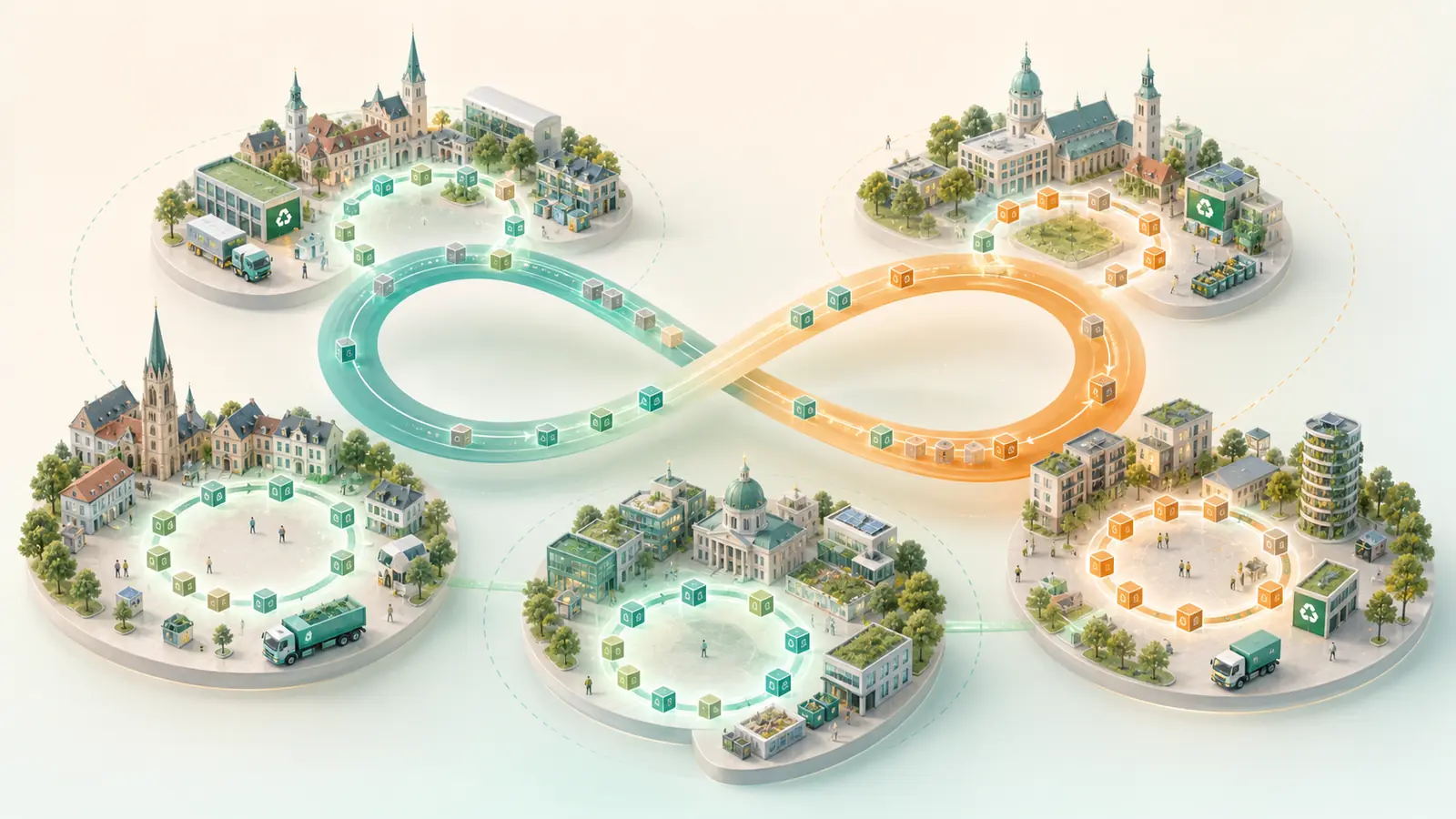
LOOP
Local Optimization with Overflow Protocol
A draft, federated protocol for describing material and product flows between cities. It is intended to let municipalities share surplus resources and coordinate circular-economy initiatives while keeping data sovereignty; today it exists as schemas and a lab demo — no such exchange is operating. Built around MaterialDNA, ProductDNA, LoopCoin, and LoopSignal.
Read the spec
MaterialDNA
Material Identity & Digital Passport
A draft identity model for physical materials. Lab examples can include composition, origin, quality, and chain-of-custody fields to discuss traceability; the data is not independently verified or a permanent lifecycle record.
Explore MaterialDNA
ProductDNA
Draft Product Identity Model
A draft product-identity model for lab exploration. It includes product category, condition, manufacturer, lifecycle stage, and references to constituent MaterialDNA entries; it does not demonstrate Digital Product Passport compliance or deployment readiness.
Explore ProductDNA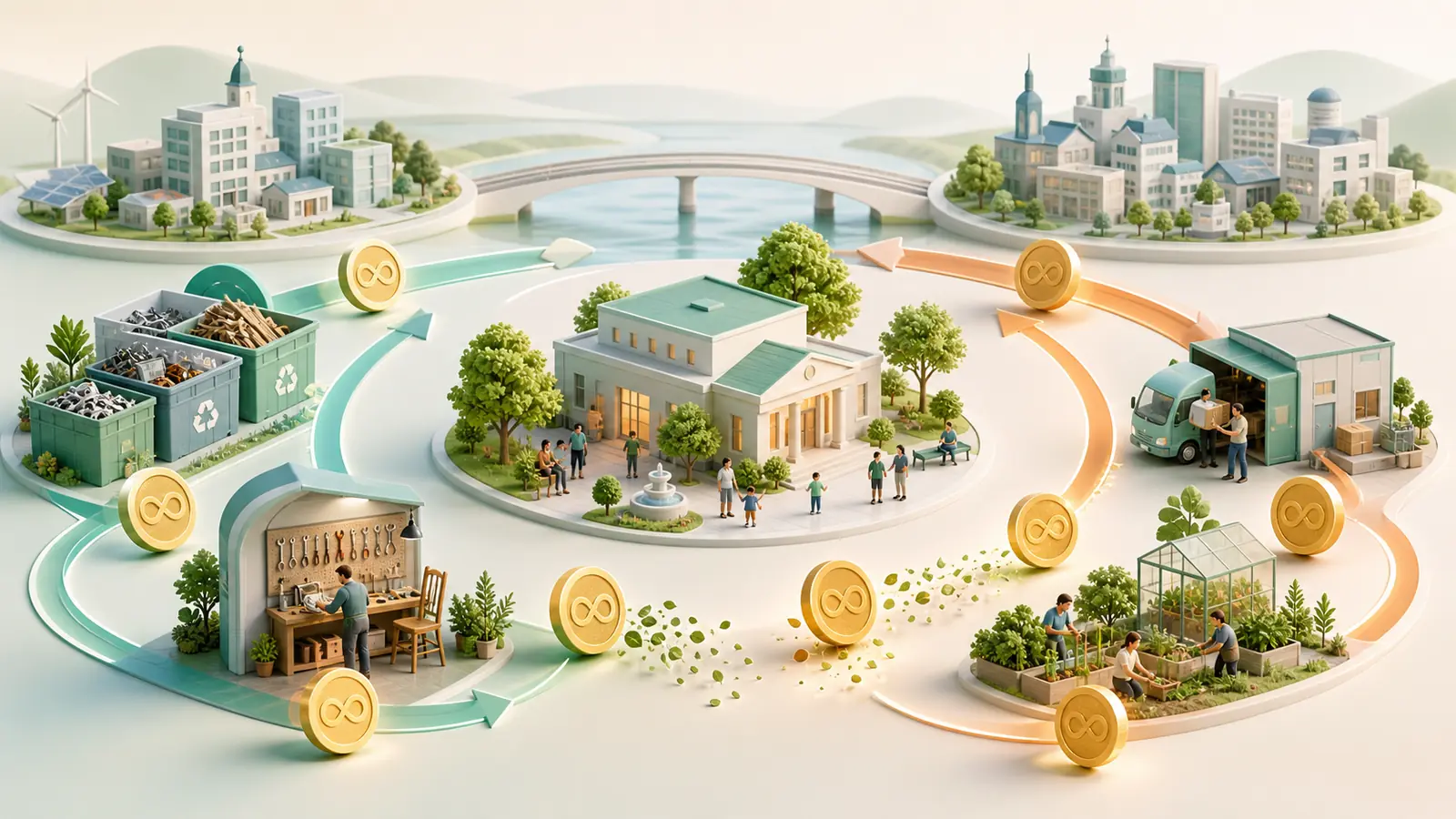
LoopCoin
Local Settlement Currency
A draft node-issued value model for lab scenarios. Its example transfer, expiry, decay, and clearing fields do not operate a currency or demonstrate settlement between peers.
Explore LoopCoin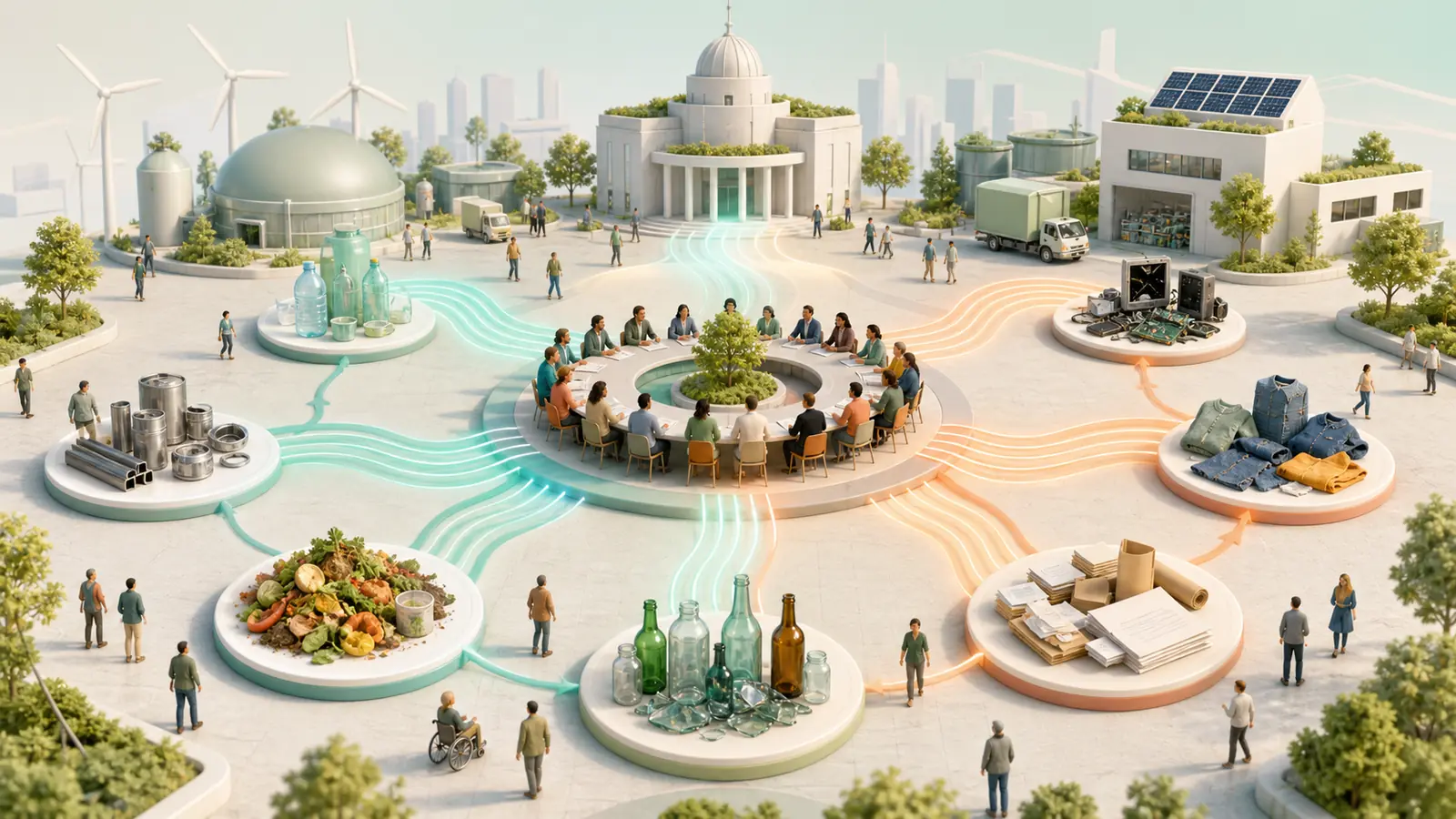
LoopSignal
Community Preference Signal
A draft preference-signal model for lab scenarios. It can be used as an illustrative routing input, but it does not collect community preferences or determine operational priorities.
Explore LoopSignal
LoopCost
Routing Cost Function
A draft routing-cost model: base price plus export and import penalties derived from LoopSignals, plus distance cost. Its parameters can be explored in lab examples; outcomes such as local pricing or savings are not guaranteed.
Explore LoopCostHow LOOP Works
Who is this for?
Cities & Municipalities
Explore draft data fields and interoperability questions relevant to circular procurement and product-passport research.
City portals →Operators & Logistics
Run lab nodes, integrate LOOP flows into existing material management systems, and participate in federated exchanges between municipalities and circular economy platforms.
Implementation guide →Researchers & Labs
Explore open schemas, contribute to the protocol specification, and test circular economy models using the lab API and validated example payloads.
Schema library →Get Started
Explore
Protocol Spec
Full specification, schemas, and security requirements.
Learn moreSchema Library
JSON-LD contexts, JSON Schemas, and example payloads.
Learn moreCity Portals
Explore illustrative city-portal patterns for local material flows and initiatives (lab concept, no live deployments).
Learn moreGovernance
RFC process, decision-making, and community proposals.
Learn moreReady to shape the circular economy?
Whether you represent a city, a research lab, or a circular economy operator — register interest to be contacted about future research or lab-demonstration discussions.